U-Haul vs Penske vs Budget: A Real Truck Rental Cost Comparison for 2026

Planning a cross-country move and trying to stretch every dollar? For decades, the budget playbook has been simple: rent a giant truck, bribe a few friends with pizza, and hit the road. Those bold daily rates plastered on the sides of moving trucks still make a Do-It-Yourself (DIY) move look like the obvious money-saver, but the 2026 reality is brutal, with diesel prices climbing, insurance premiums rising, and toll fees on commercial vehicles eating bigger chunks out of every trip.

What looks like a cheap weekend adventure on paper often turns into a stressful, expensive headache the moment you hit the open road. In this guide, we will break down what U-Haul, Penske, and Budget actually cost in 2026, expose the fees hiding in the fine print, and explain why hauling your own household across the country might not be the bargain you think it is.
Why the “Cheap Move” Idea Is Mostly a Trick of the Mind
Before we get into the specific companies, it helps to understand why the DIY moving myth refuses to die. It comes down to something called the sweat equity fallacy. We are wired to believe that if we do the work ourselves, we must be saving money.
Picture this. A professional mover quotes you $5,000. A truck rental site quotes you $1,800. Your brain immediately spots a “$3,200 savings” and gets excited.
What your brain conveniently forgets in that moment:
- About 200 gallons of fuel you will personally pump
- Four or five nights of roadside hotels
- Moving blankets, dollies, straps, and ramps you have to rent
- The wear and tear on your spine and your nerves
- A full week or two of your own time
Once you do the actual math, the “savings” shrink dramatically. Sometimes they disappear entirely. Sometimes you end up paying more.
Meet the Big Three Truck Rental Companies
Three names dominate the moving truck space in North America. Each one has its own personality, pricing model, and quirks worth knowing before you sign anything.
U-Haul: The Familiar Orange Truck on Every Corner
U-Haul has been around since 1945 and remains the most recognizable name in the business. They run on a franchise model, which means you can rent a truck from a dedicated U-Haul center, a gas station, a hardware store, or a self-storage facility.
What they are known for:
- The biggest fleet variety in the country, from 8-foot pickups all the way up to 26-foot box trucks
- The widest network with more than 20,000 locations
- Aggressively low base rates that grab attention (the famous “$19.95 a day”)
Where they fall short:
Because the fleet is huge and spread across thousands of independent locations, truck quality is a roll of the dice. You might pick up a clean, low-mileage truck. Or you might end up with one that has 150,000 miles on the odometer, a stiff suspension, and an air conditioner that gives up halfway through Texas.
That $19.95 rate is also strictly for local round-trip moves. One-way moves come with a bundled price, strict mileage caps, and tight day limits set by their pricing algorithms.
Best for: Last-minute moves, rural pickups, and short local trips where convenience beats fleet quality.
Penske: The Reliable Workhorse
Penske is the premium player in the DIY truck rental space. Unlike U-Haul, Penske has deep roots in commercial trucking and corporate fleet leasing, and that background shows up in their consumer rental fleet.
What sets them apart:
- Newer trucks with modern features, comfortable seats, and reliable air conditioning
- A real maintenance program, not a franchise patchwork
- Unlimited mileage on most one-way long-distance rentals
- Commercial-grade 24/7 roadside assistance
The trade-off:
Penske usually quotes higher than U-Haul or Budget upfront. But for a cross-country haul, that extra cost often pays for itself. You can take a wrong turn, add a scenic detour, or stop to visit family without watching the meter spin out of control.
Best for: Long-distance moves where comfort, reliability, and peace of mind are worth a few extra dollars.
Budget: The Discount Option
Owned by the Avis Budget Group, Budget Truck Rental targets the price-first customer. Their entire model is built on undercutting the competition with the lowest possible sticker price.
The good news:
- Aggressive discount codes for military, students, AARP members, and more
- Frequent promotions taking 15 to 20 percent off
- The lowest base rates of the three
The not-so-good news:
- A smaller, older fleet than Penske
- Only around 1,500 locations, far fewer than U-Haul
- Availability problems during peak moving months (May through August)
- Strict mileage limits with steep overage fees
Best for: Short moves under 300 miles where you just need the cheapest truck available.
Quick Comparison Table: U-Haul vs Penske vs Budget
| Feature | U-Haul | Penske | Budget |
|---|---|---|---|
| Best for | Convenience, rural moves, local trips | Long-distance, cross-country | Tight budgets, short trips |
| Fleet variety | Excellent (8' to 26') | Good (12' to 26') | Fair (12', 16', 26') |
| Long-distance mileage | Strict limit, fees for overages | Unlimited on most one-ways | Strict limit, fees for overages |
| Discounts | Rare | AAA, military, students | Military, AARP, more |
| Fleet age | Highly variable | Consistently newer | Generally older |
| Locations | 20,000+ | 2,500 | 1,500 |
The Hidden Costs That Wreck Your “Cheap” Move
Here is where the DIY illusion really falls apart. The number you see on the rental quote is just the starting line. Everything else comes out of your pocket, often in ways you never planned for.
Let’s walk through a real 1,500-mile move and count every dollar.
Fuel Costs Will Drain Your Wallet
Moving trucks are heavy bricks with terrible aerodynamics. Empty, they average 8 to 10 miles per gallon. Loaded with 8,000 pounds of furniture and boxes, you are looking at 6 to 8 MPG on a good day.
For a 1,500-mile trip at 8 MPG, you will burn roughly 187 gallons of fuel. At 2026 prices hovering around $4.00 to $4.50 per gallon, that is $750 to $850 out of pocket before you even arrive at your new driveway.
Insurance Is Not Optional, and It Is Pricey
Your personal auto policy on your Honda Civic does not cover a 26,000-pound commercial truck. At the rental counter, you will be offered two damage waivers:
- Collision Damage Waiver (CDW): Covers damage to the rental truck itself
- Supplemental Liability Insurance (SLI): Covers damage to other people and their property
Skipping coverage is financial roulette. If you total a rental truck, you could be staring down $50,000 or more in damages. Daily insurance runs $30 to $150 per day, which means a five-day trip adds another $200 to $750 to your bill.

Toll Roads Treat Big Trucks Differently
Commercial vehicles do not pay car rates on toll roads. Tolls scale with axle count and weight. A loaded 26-foot truck rolling through the Northeast turnpikes or Midwest tollways will bleed money at every booth. Plan on $50 to $150 in tolls, and more if your route hits multiple toll states.
Moving Equipment You Will Have to Rent Separately
The truck comes empty. That means no dolly, no blankets, no straps, no ramp protection. Want to move your refrigerator without throwing out your back? Rent a dolly. Want your dining table to survive the trip in one piece? Rent a stack of moving pads. Expect to add another $100 to $200 just for basic gear.
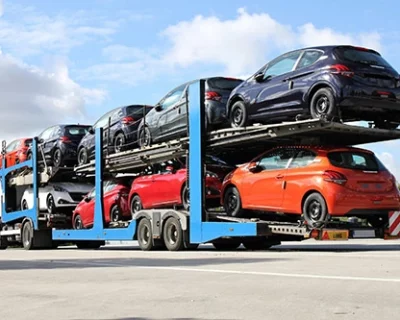
Auto-Transport
If your first concern is having your vehicle transported safely and efficiently, enclose shipping is the way to go.
Read more
Packing Services
Our moving teams are trained to pack your belongings in the most efficient manner possible.
Read more
Storage Service
Knowing what kind of surprises cross country move may hold, we offer 30 day free storage for belongings at the origin state.
Read moreHotels and Food on a Multi-Day Drive
You cannot safely drive 1,500 miles in a moving truck in one shot. Driver fatigue in heavy vehicles is a real safety risk. You will need three to four nights of lodging, and not just any motel. You need a parking lot big enough for a 26-foot truck and well-lit enough to keep your belongings safe overnight.
Add three meals a day for you and anyone traveling with you, and your “cheap” DIY move just picked up another $600 to $1,000.
The True Cost of Your Own Time
How much is a week of your life worth? Pack for five days, load for two, drive for five, unload for two, and you have burned two full weeks. That is time you could have spent earning income, settling into your new job, or actually enjoying your new neighborhood instead of recovering from a road trip.
The Real Numbers: A 1,500-Mile Move Compared
Here is what the math actually looks like for a three-bedroom home moving 1,500 miles in 2026:
| Expense | DIY Truck Rental | Professional Movers |
|---|---|---|
| Base quote | $1,800 | $5,500 |
| Fuel | $850 | $0 (included) |
| Insurance | $300 | $0 (basic included) |
| Tolls | $100 | $0 (included) |
| Equipment | $150 | $0 (provided) |
| Lodging (4 nights) | $600 | $0 (you fly) |
| Food on the road | $300 | $0 (you fly) |
| Heavy lifting | You and your friends | Trained crew |
| Total | $4,100 plus exhaustion | $5,500 plus peace of min |
The “savings” from the DIY route shrink from $3,700 to just $1,400 once you count the real costs. For most people, that small difference is well worth skipping a week of grueling labor, white-knuckle driving, and roadside motel stays.
Driving a 26-Foot Truck Is Harder Than You Think
Stopping Distance Is No Joke
A fully loaded 26-foot truck can weigh 20,000 to 25,000 pounds. That mass means stopping distance is roughly three times longer than a passenger vehicle. If a car cuts you off and slams on the brakes, you cannot react the way you would in your sedan. You have to leave a massive cushion of space ahead of you at all times, which is mentally exhausting for hours on end.
Wind Can Push You All Over the Road
A moving truck is basically a giant metal box with awful aerodynamics. Drive across the open plains or through a mountain pass on a windy day, and you will feel crosswinds physically shoving the truck into the next lane. You will spend hours gripping the steering wheel just to keep going straight.
Blind Spots and Tail Swing
There is no rearview mirror, because the cargo box blocks everything behind you. You are relying entirely on side mirrors. Worse, the rear axle sits forward of the back bumper, which creates a phenomenon called tail swing. When you turn the wheel sharply left, the back end of the truck swings hard to the right.
New drivers regularly take out stop signs, gas pumps, and parked cars because they forgot the back of the truck has its own ideas about turning.
Low Bridges Will Destroy Your Truck
When you drive a car, you never glance at the yellow clearance signs hanging from overpasses. Behind the wheel of a 26-foot truck, ignoring those signs is catastrophic. A standard moving truck needs at least 12 feet 6 inches of clearance. Drive under a low bridge or try to slip through a fast food drive thru, and you will peel the roof off the truck like a sardine can.
Here is the painful part: rental insurance specifically excludes overhead damage. You will be on the hook for tens of thousands of dollars in repairs. People call this the “can-opener effect,” and it is far more common than rental companies want to admit.
A Smarter Cross-Country Strategy
Once you stack up the hidden costs, the physical risk, and the mental drain, hiring help starts looking less like a luxury and more like plain common sense. But there is a third option a lot of movers never think about.
What if you could fly to your new home and still get your car and belongings there without driving a giant truck across the country?
This is where Flat Price Auto Transport comes in. Instead of towing your car behind a rental truck (or worse, driving two separate vehicles cross-country with your spouse), you can ship your vehicle while you fly. Plenty of smart DIY movers use a hybrid approach:
- Pack and ship your household with a moving service or compact rental
- Have your car shipped door to door by Flat Price Auto Transport
- Fly to your new city refreshed, not road-worn
You skip the fuel cost of towing, avoid piling thousands of extra miles onto your car, and arrive at your new home with energy to spare instead of a sore back and a dead schedule.

Why Professional Help Often Wins the Math
When you add everything up, here is what hiring pros (or shipping your car) actually buys you:
- Transparent pricing. Binding estimates from reputable companies cover fuel, tolls, insurance, equipment, and labor in one upfront number. No surprises at the pump.
- Your back stays intact. Loading king mattresses and oak dressers up a slippery metal ramp is how people end up in physical therapy. Trained crews have the technique and the gear to do it safely.
- Your belongings are protected. Items get wrapped, padded, and packed to handle road vibration. Valuation policies cover you if something does get damaged.
- You get your time back. Skip a week of driving and arrive at your new home ready to actually live in it.
Smart Move-In Tips From People Who Do This Every Day
Whether you go DIY or hire help, a few habits make move-in day go much smoother.
Pack a survival kit. Toss your essential documents, daily medications, basic toiletries, phone chargers, and a few changes of clothes into a suitcase you keep with you. If you are flying ahead of your shipped car or movers, you will have what you need until everything arrives.
Turn on your utilities early. Get electricity, water, and internet activated 48 to 72 hours before you arrive. You want the AC or heat running during unloading so the crew works comfortably and you can start unpacking without sweating through your shirt.
Handle parking permits ahead of time. Large moving trucks and auto carriers need serious space. If you are moving into a dense urban area, a downtown high-rise, or a strict HOA community, contact your new city about a temporary parking permit. This keeps everyone close to the front door and saves you from expensive long-carry fees.
Confirm your delivery windows. Long-distance movers and auto transporters typically operate on a delivery spread (a window of a few days rather than a fixed date). Stay flexible and keep your phone on you for driver calls.
The Bottom Line: Move Smarter, Not Harder
The pull of the DIY truck rental is built on a misunderstanding of what a cross-country move actually costs in 2026. When you do the honest math, the advertised savings from U-Haul, Penske, and Budget disappear under fuel bills, daily insurance, equipment fees, hotel stays, and pure physical exhaustion.
A big move should feel like the start of an exciting new chapter, not a week of back pain and highway anxiety. Move smarter, not harder.
If you are planning a cross-country relocation and want to skip the rental truck headache, Flat Price Auto Transport can ship your vehicle door to door so you can fly to your new home and arrive ready to enjoy it. Transparent pricing, reliable carriers, and no surprises at the pump. Reach out for a free quote and let us handle the long miles while you focus on starting your new life.
FAQ
Is Penske really cheaper than U-Haul for long-distance moves?
Not on the base rate, but often in the final tally. Penske usually quotes higher upfront, yet most of their long-distance rentals include unlimited mileage. If you are moving cross-country and want to avoid the strict mileage caps and per-mile overage fees that U-Haul and Budget impose, Penske typically ends up cheaper and a lot less stressful.
Do professional moving companies charge extra for fuel on moving day?
No. Reputable, licensed long-distance movers do not add surprise fuel charges at the end of your move. When you receive a binding estimate, fuel, tolls, and transportation costs are already baked into the price. You are protected from the fuel price spikes that DIY movers face at every pump.
What happens if my rental truck breaks down mid-move?
You call the rental company’s roadside line. Penske has the strongest reputation for fast response times. But no matter the company, a breakdown means you are stuck on the shoulder or in a motel for hours (sometimes days) while the truck gets repaired. The company will fix the truck, but they will not reimburse you for lost wages, missed work, or your ruined schedule.
Can I legally drive a 26-foot moving truck on a regular driver's license?
Yes. In the United States and Canada, consumer rental trucks are kept just under the 26,001 pound Gross Vehicle Weight Rating limit, which means anyone with a standard license can drive them legally. Legal does not mean safe, though. An inexperienced driver handling that much weight on a busy highway is genuinely risky business.
Should I tow my car behind the rental truck or ship it separately?
Towing adds significant strain to a rental truck, drops your fuel economy even further, and turns a tricky drive into a really tricky drive. Most experienced movers recommend shipping your car with a dedicated auto transport company like Flat Price Auto Transport instead. You avoid the towing risk, keep thousands of miles off your car, and free yourself to fly ahead of the truck if you want.
Which rental company works best for a short local move?
For trips under 50 miles, U-Haul and Budget are typically the best picks. U-Haul has more locations than anyone, so pickup is convenient. Budget often runs discount codes that beat everyone else on price. Since fuel and mileage do not add up much on a local move, whoever has the lowest base rate usually wins.